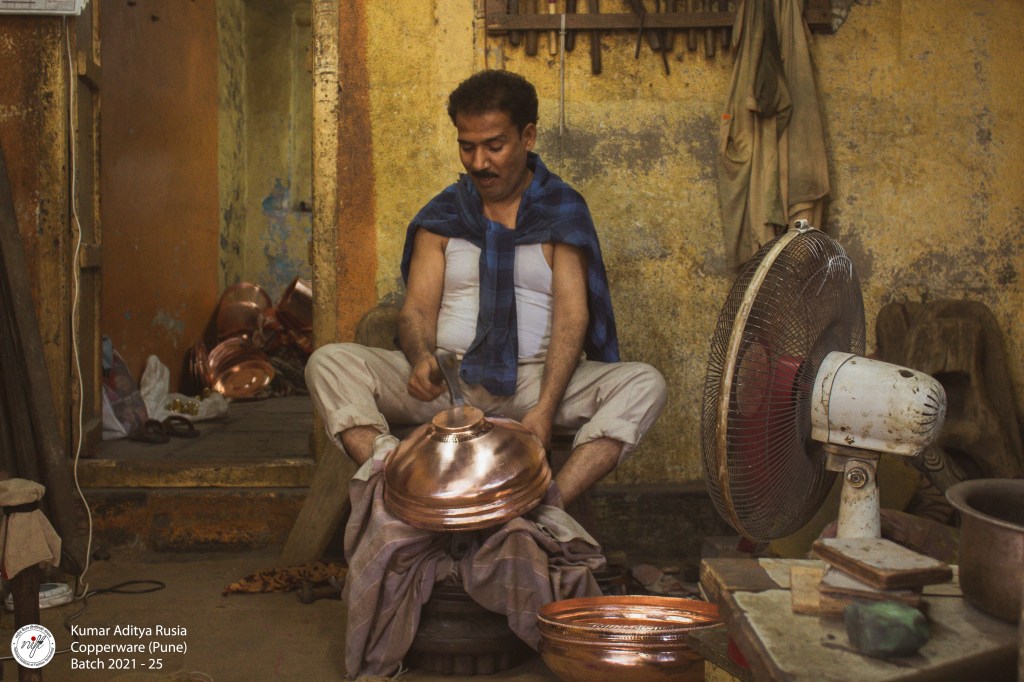
With its deep sense of historical charm, Pune is known as the cultural centre of Maharashtra. A craft that stands as a testament to the artistic heritage of the region is the Tambat craft, an ancient form of copperware craftsmanship. Amidst its ageless beauty and the city’s ancient sites, we discovered the Tambat community residing for almost 250 years in Kasba Peth of old Pune. As we reach the Kasba Peth, the steady rhythmic sound waves that keep dazzling in those lanes from dusk to dawn hypnotise us and make us realise what makes those alleys so lively every day. Let’s understand the story of those lanes and the sound of the thrashing metal gadgets.
The word “Tambat” translates to “copper-beaters,” and this ancient community is believed to have migrated to Pune from the Konkan region in Maharashtra. Most of the Tambats came to Pune during the duration of the rule of Sawai Madhavrao (1774–1795). They brought with them the age-old craft of working with copper, creating intricately designed utensils, religious artefacts, and decorative pieces that showcased their exceptional artistry. The sound of the thrashing metal grows louder as we go towards the artisan workshops.
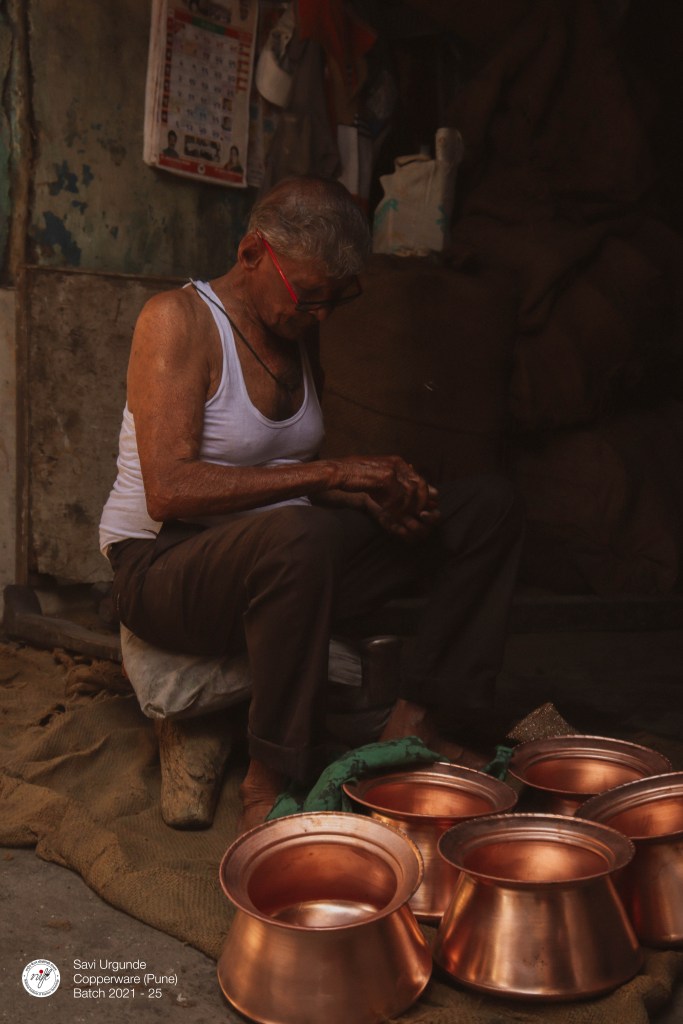
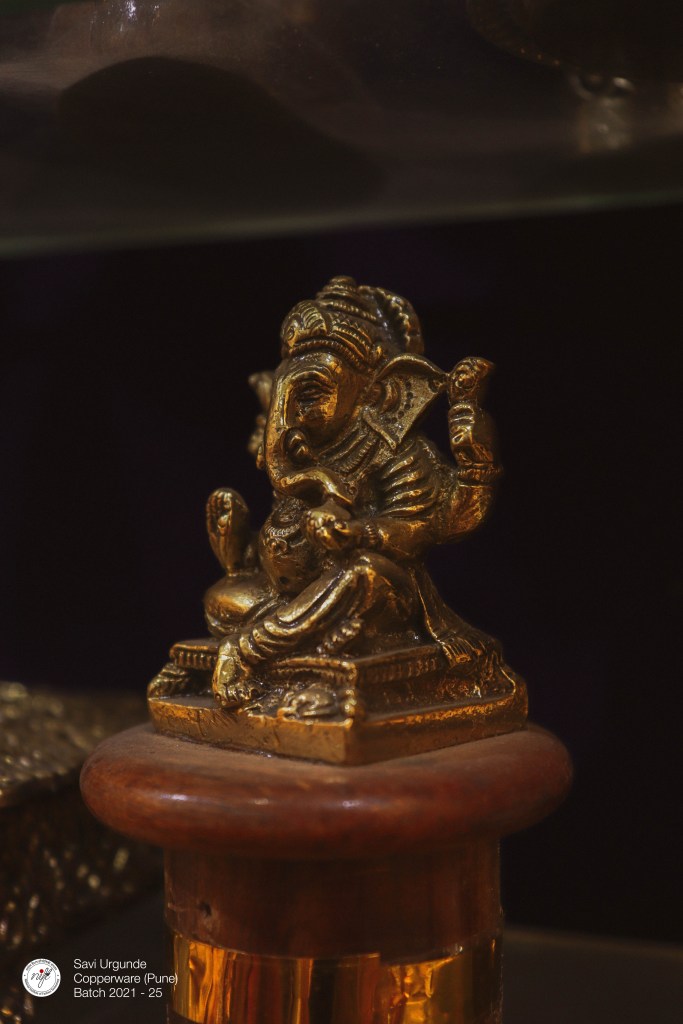
From the middle-aged artisan to the most experienced gentleman in his 80s, none have faced any hearing aid to date. They say “The noise isn’t noise for them.” They even tell us how their children and grandchildren slept peacefully and have grown up in those noises. An artisan, Mr Sandeep Lanjekar, who is in his late 50s and is the 5th generation of his family in this craft claims that they can hear us even without having to stop their ongoing work and has better ears than most youngsters. Not restricting themselves to just copper, the Tambats have also started showing their excellent skills in Silver and Gold. The nakshi kaam of the Tambats done on silver can be seen in most of the temples of the city and even outside the city.
Despite its historical significance and artistic brilliance, the Tambat craft is facing a multitude of challenges that threaten its survival. When the community came in and settled in the Tambat Ali during the rule of Peshwas, there were around 300 families. Today less than 30 families reside and work in the Kasba Peth. The next generation of those families also show no interest in learning the craft and even the artisans do not encourage them to pursue the craft. The artisans speak about the injustice that happens to one for carrying the craft ahead and tell us how they encourage their future generations to choose alternative career paths.
A 73-year-old artisan, Mr Suresh Dashrath Haravlikar told us during a conversation how both of his sons know the craft and had learnt it a long time ago but due to the very less income in the business they did not pursue it ahead and preferred to feed their families by driving an auto rickshaw.
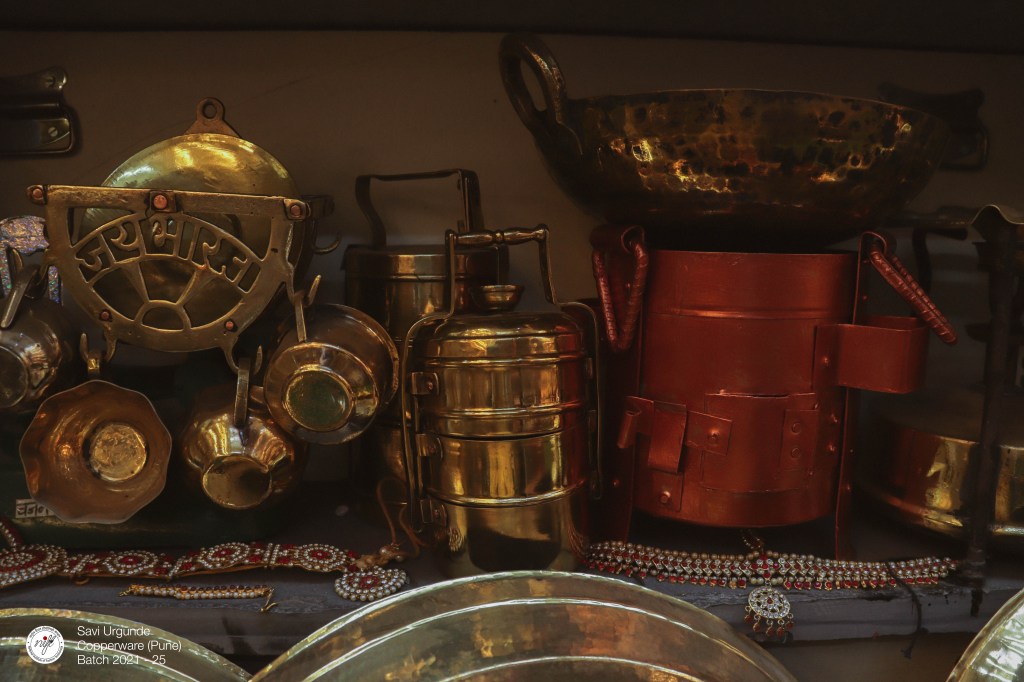
The Tambats earlier held themselves in immense pleasure and glory for having served the Maratha empire. But in the present scenario, their future generations do not want to pursue the craft ahead anymore. The only reason is the less money and less awareness amongst the people about the craft and even the importance of using Tamba in their regular lives. The pots, utensils, water heaters, khel bhandi or the small utensils for kids’ kitchen sets, and the merchandise for temples cannot be of a better quality and made with more love, precision and intricacy than the Tambats.
No longer constrained to simply pots and utensils, they may be preserving the marketplace for copper with new-age merchandise for city consumers. Copperwares are highly used as a part of interior decorations and to maintain the aesthetics of authentic 5-star restaurants. Little do the people care about the working conditions of the craftsmen who make these amazing artefacts and utensils for them to click aesthetic visuals and post them on social media.
The question now stands is are the consumers aware of this market available for them right within their city? The pleasure of visiting the Kasba Peth and meeting the artisans, seeing them making your products not only motivates them to pursue the craft further but also gives you the pleasure of buying authentic merchandise. Mr Lalit Viku Lanjekar, a 40-year-old artisan rightly calls himself “Backstage Hero”. Next time when you go out shopping for copper wares or enjoy clicking pictures in a restaurant with Tambat artefacts and utensils, for once appreciate the artisans and ask yourself will your next generation be able to see the craft if it stops entirely.
Despite the decline of the change in Kasba Peth, you may nonetheless listen to the sound of copper being hammered via way of means of this handful of craftsmen from 8 am to 8 pm each day except Sunday. Locating them withinside the antique metropolis may be a touch tricky, simply permit your ears to lead the way.

 Fashion&Styling
Leave a comment